Over 800 works span six rooms of floor to ceiling exhibition space, hung salon style, at the de Young Open. A venerable feast for the eyes, the Open packs in as many bay area artists as could be reasonably accomodated, an entire wing dedicated to showing locals and visitors alike the creative bounty of the bay area.
Per the FAMSF website: Building on the tremendous success of the inaugural de Young Open in 2020, the second triennial of this juried community art exhibition celebrates the voices and visions of Bay Area artists. The 883 works on view were created by artists who live in the nine counties surrounding San Francisco Bay: Alameda, Contra Costa, Marin, Napa, San Francisco, San Mateo, Santa Clara, Solano, and Sonoma. This year, 7,766 talented artists each submitted an artwork. Submissions were juried by eight curators, along with distinguished Bay Area artists Clare Rojas…[sic]( I stopped there because I dont know who any of the other jurors are)
How do these artists see themselves in the family of creatives that toil here in the fog? What does this work say about the collective experience of a liberal, tech forward, progressive hub pre, post, and in the throes of covid? How does a show like this effect the tech sector, the restaurant business, or the design agencies and art schoolsthroughout the Bay, and what is the relationship in terms of inspiration? Perhaps most pressing, for me, how in hell did the curators organize this space? The amount of measuring, thematic grouping, careful handling, hanging, and labelling of this exhibit is itself a monumental feat, and must have been a total nightmare for the handlers of the De Young. (I freelance curated and hung pop-up shows in a small hippie community for 5 years).
As a recently returned bay area resident, having left around 2013, I was concerned about what the collective had experienced in the last decade, and how it effected this planetary chakra of downright weirdness. Coming back, I was fearful that creativity would be quashed by the heavy burden of rent, economic instability, psychic clouds of anxiety, broken community dialogues disrupted by social distancing and gentrification, and the dreaded corporate art style that has encrypted marketing in banks, dentists offices, and municipal transit authority signs with freakish uniform hipness.
The De Young Open quelled these fears. Well, sort of…
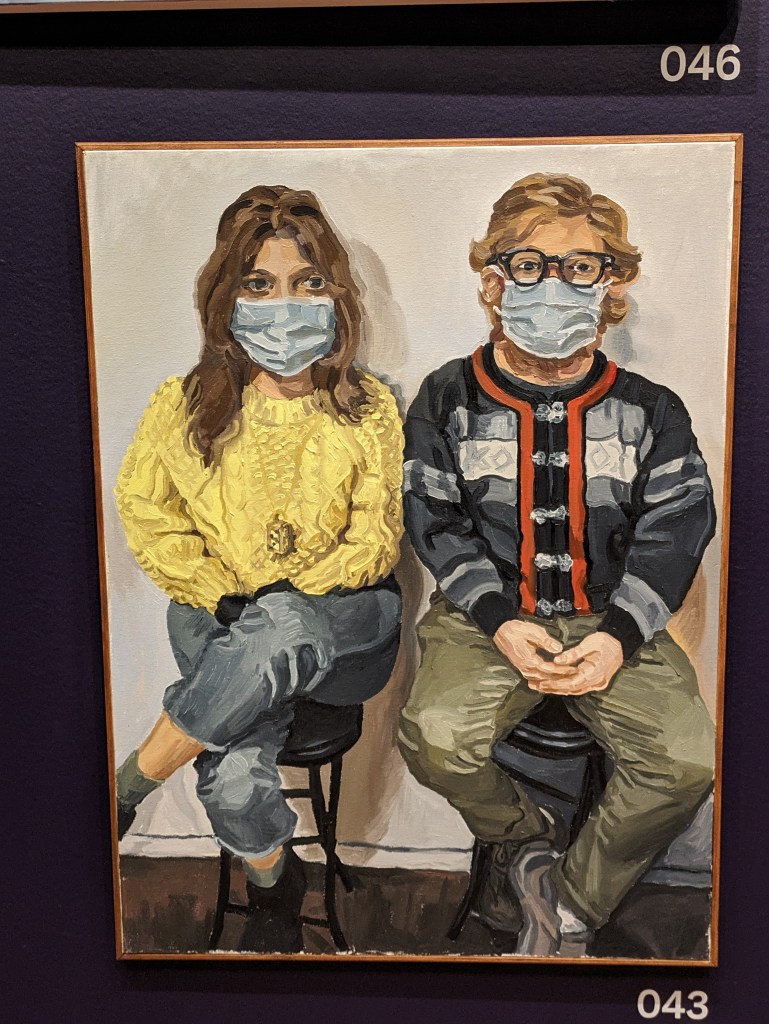
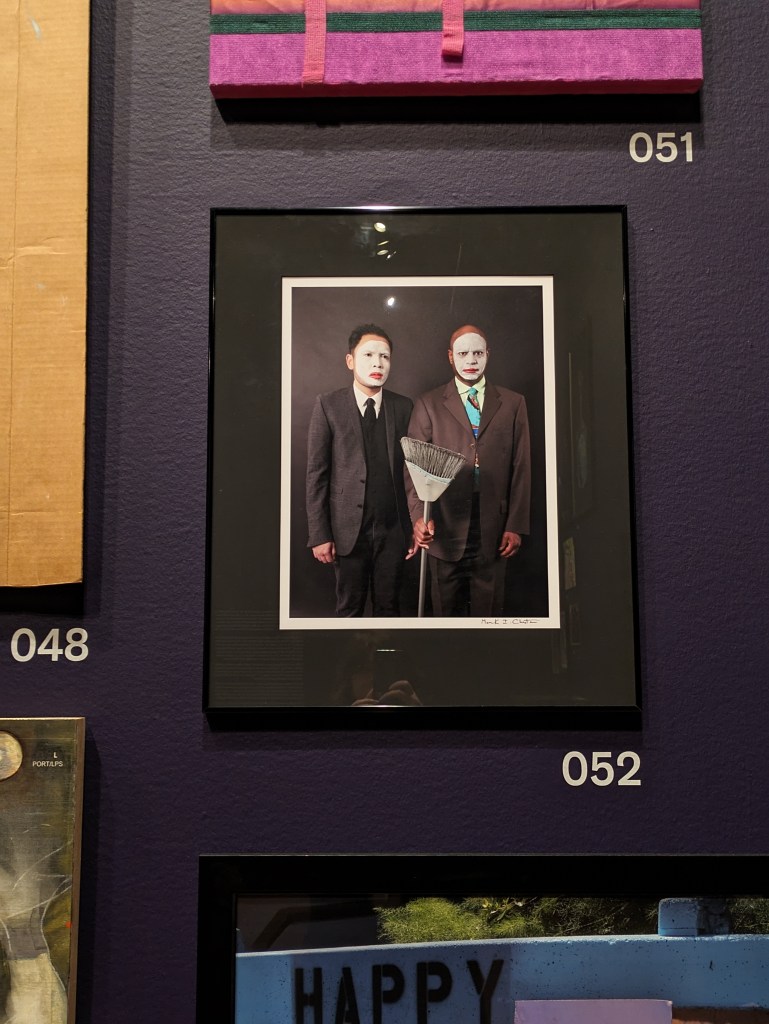
One of the most striking qualities of this exhibit is the uniformity of theme and artistic tribute to works of the past. Many artists seemed to be contemplating similar themes and looking back on the same historic work. Some rooms contained multiple iterations of paintings. American Gothic, in particular, claimed almost an entire wall, with striking variations, including a dramatically lit photograph of a black couple in white-face, a sentimentally rendered oil portrait of a millenial age couple in masks, and a graphioc style acrylic painting of a black couple with afros holding a pic in place of the rake, just to name a few.
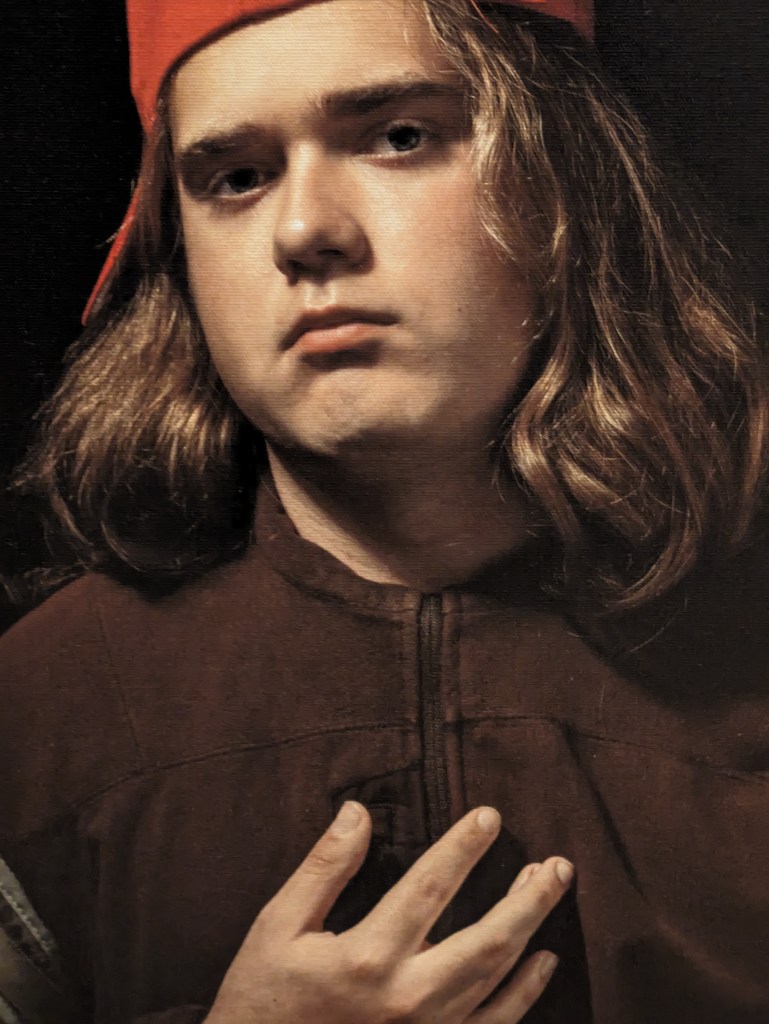
The largest room in the exhibit was a long hall of portraits, with self portraits taking up the bulk of the space. Modern spins on Rembrandts, Kahlos, and Mapplethropes come to mind in my recollections. Explorations of gender, race, and sexual orientation abounded, and the treatment of these portraits were heavy on sentimentality, romance, and uninhibited joy. For me, this was one of the most revealing aspects of the exhibition, in terms of what must be on the collective conscious if art does, in fact, reflect life.
Social media has revolutionized our relationships with the internet, each other, and ourselves. Our relationship to ourselves is impossible to disentangle from how others see, treat and relate to us. How strange, then, that we share a closer proxy to the famous, the depraved, the lost-to-the-past, the political figures, that once existed more untouchably in print, or on prerecorded videos. We share a table with the beautiful people that seemed to have it all together, the fitness gurus, the spiritual leaders, who all seem to have something to gain by winning our attention, and we willing give it to them. We have free access to the insights and conversations of total strangers. The cultural and social heirarchies of our daily lives that can be so instincual we hardly notice them have bridged the communication gap between ourselves and others that once invisibly existed, but had, and indeed continues to have, a stranglehold on us, but in the window to the internet there is some strange, beautiful, addictive osmosis that none of us can get enough of. How does our self concept change when we see how we are a monolith, when the monolith of others becomes an individual, and when greivances, insecuroties, and deeply personal revelations can be shared so easily?
The self becomes a subject of great study, intense importance, and as difficult to pin down as ever. Ego and ID doesnt change, even if the dimension they exist in grows more or less cloudier. With that comes the inevitable self prescribed meditation on the self, and our deferrence to eastern spiritualitys preoccupation from time immemorial is cheapened, ground up, and commodified. The resultant substrata of the to vibe or not to vibe preponderance that dominates the conversation of “being present” may have been left behind in 2019, but still the dilemma of WHO WE ARE persists, and historical documentation of the self, pre frued, post jung, cant contain the answer since Steven Jobs came on the scene. This has been demanded of us since the moment the ultimate machine of disassociation has been placed into our tiny simian hands (see:iphone).
Our cultures current, unspoken but well illustrated discourse reminds me of how James Baldwin described being amoung other writers, culture creators, and great minds of his era:
Very shortly I didn’t know who I was, either. I could not be certain whether I was really rich or really poor, really black or really white, really male or really female, really talented or a fraud, really strong or merely stubborn. In short, I had become an American. I had stepped into, I had walked right into, as I inevitably had to do, the bottomless confusion which is both public and private, of the American republic.
The crux of what I came away with was that we are as a culture lacking a real identity at this junction of upheaval, but that as individuals, we are brimming with it. I struggle to define this idea without indicting painters who have painted themselves.
I should say, the self portrait is an important document and beloved tradition of art. The portraits on view were captivating in the ways that they heralded the inherent value of the self, and I can’t decide if this is a crowning acheivment. As we struggle to breath, the tides of nonsensical measures of worth, invented and thrust upon us in a world of ratings and measures so abstracted from being (credit scores, followers, likes, net worth), its refreshing to see artists continue to measure themselves against Some Unsayable Thing that makes art so necessary.
Heres where I have my foot in a different world of thinking: while individuals identites have been used against us for power grabs so insidious and genocide, cultural erasure, and patriarchy, celebration of the self must happen for liberation of the mind. At the same time, we now have opur own tv show, and that is a very maared version of reality. Our choices have become the sticking points of our admirability, scored by likes and shares. Our diets, our ancestral ties, our thriftiness, insightfulness, our relationship to our shadow self, our occult practices, our neurodivergences, sexual preferences, and achilles heels, are public and private, and there are equal pros and cons to going public with anything and everything. In that context, the self becomes so muddled, when witnesses become part of the dynamic. I guess it isn’t good or bad, but it was forced upon us by lockdowns and covid protocols, and it has some implications for our children, our consumer habits, our vulnerabilities. We only have room to consider so much at once, and when the self takes up a large amount of the space….
To make a declarative statement about the self challenges the ego. In heralding the self, do we cast aside or aknowledge to duality of our place in a community? In heralding the self, do we ignore the realities of our choices inevitable negative impact on the world, or do we make peace with the paradoxical nature of conscientiousness in the year 2023? In heralding the self, do we do a service by making a reel about the celtic traditions of our bloodlines, or are we reviving something that has become so arcane that it is only valuable in its sentimental value?
At the bottom of all of that, were turning over stones together on social media while the world that was created on dark premises burns around us.
What is undeniable is that the subject of the self was a primary theme in the de Young Open, and the results were, in a word, paradoxical.
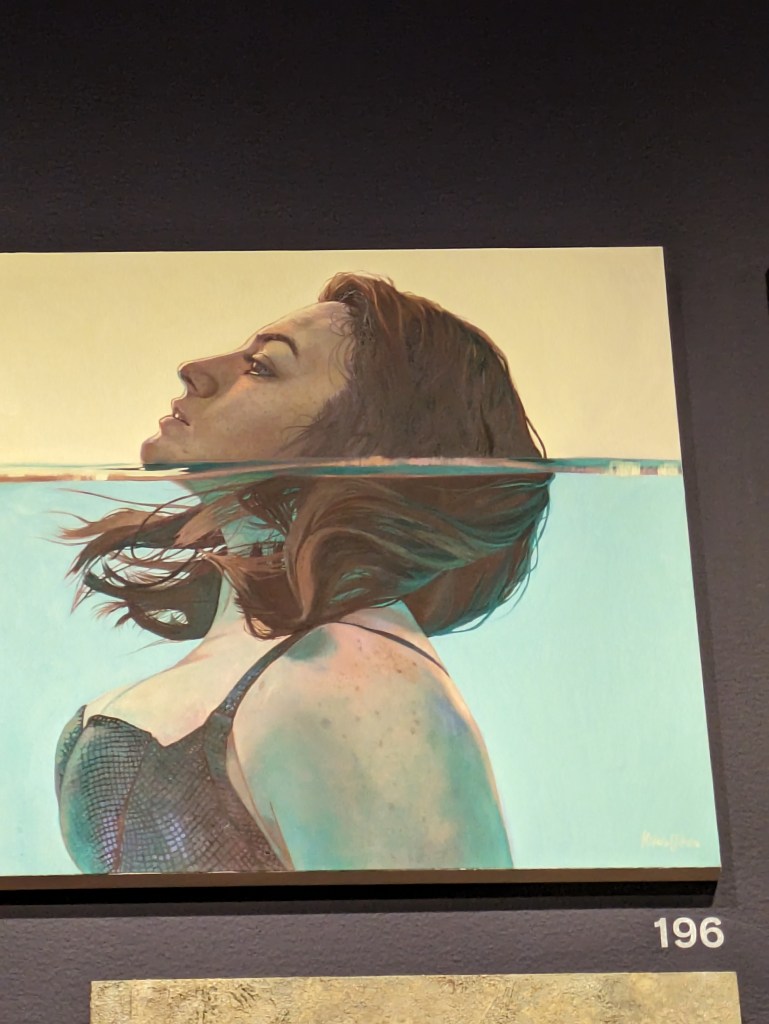
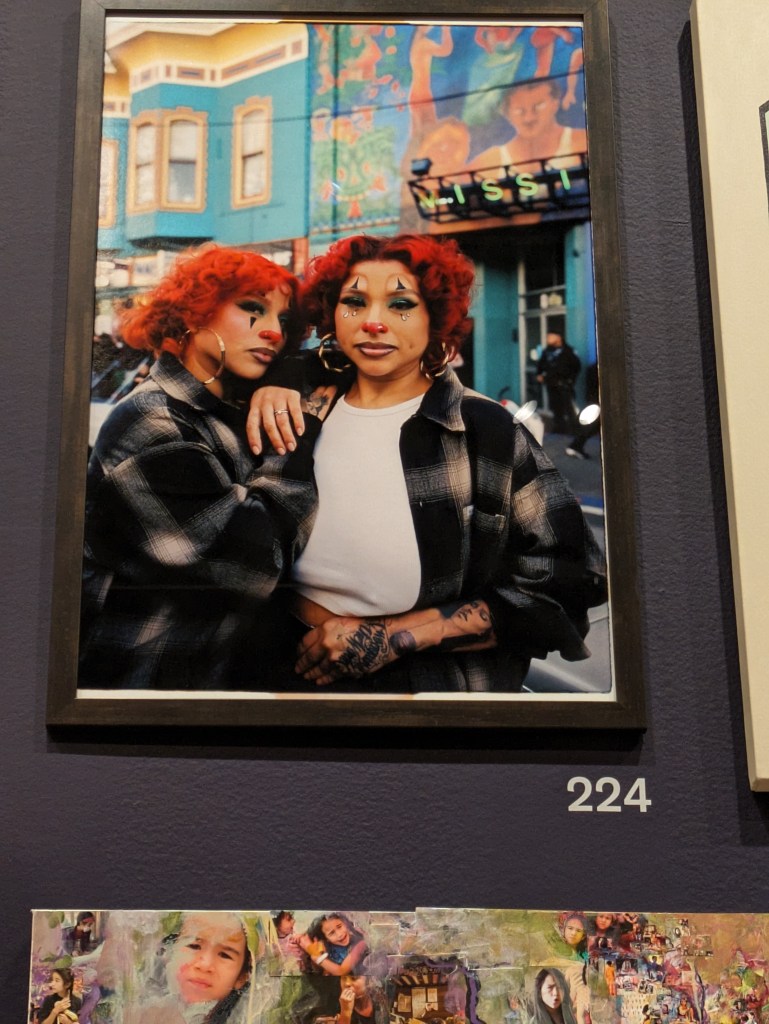
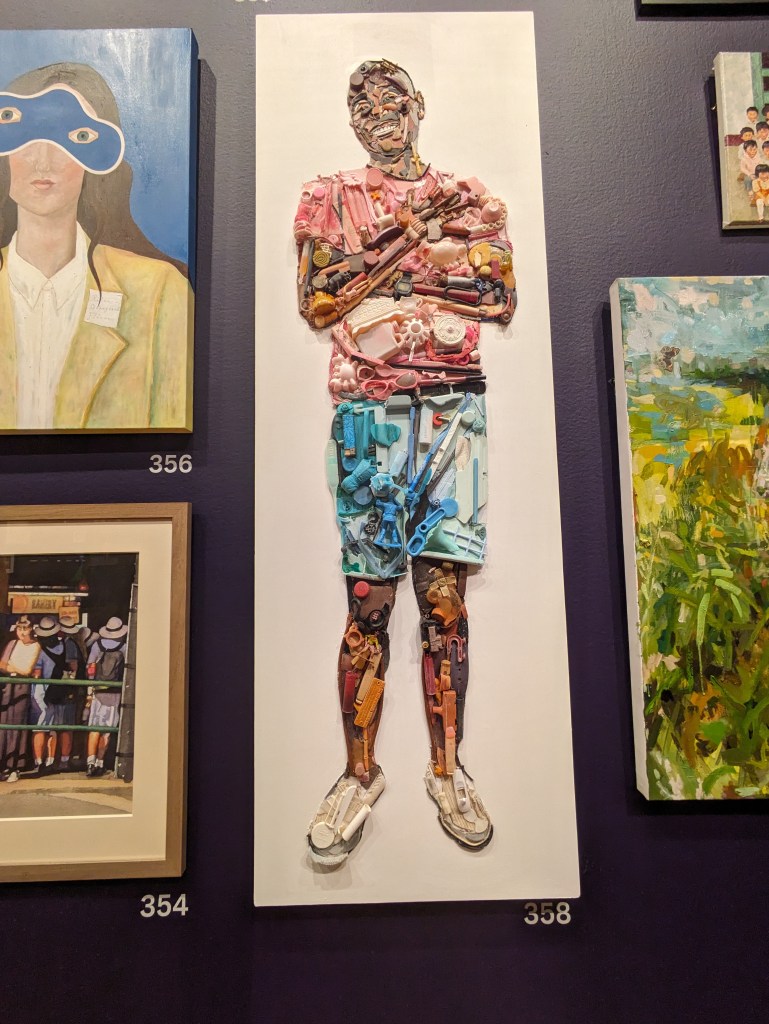
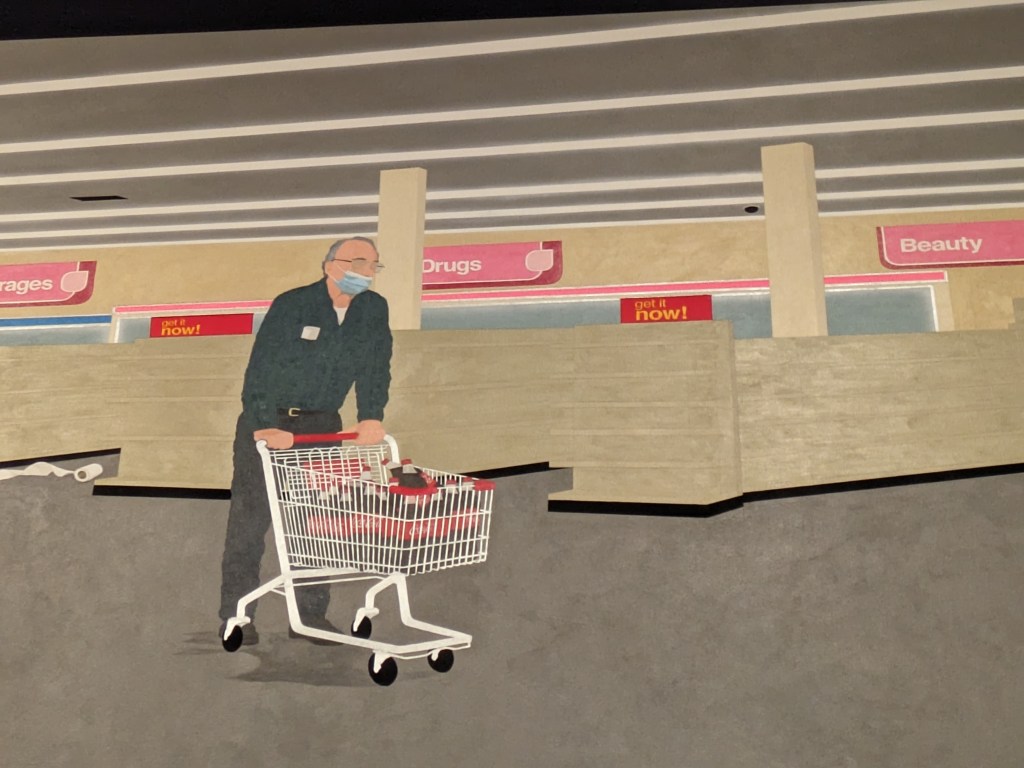
Beyond this room were peices that deserve an article of their own, post-modern explosions of color, pop, imaginative tour de forces of representational gallantry. I’ll return to those at another time, but for now, enjoy some poorly taken pictures of work I loved best from the parts of the exhibit that I did explore here.




Leave a comment